Carbon Sport
Full-length or zonal carbon-fiber components can create a low-profile, directional stiffness for performance footwear.
Sports insole manufacturer
Developed for running, court and training footwear where structure, rebound, pressure distribution and shoe volume must work together.
Discuss a sports program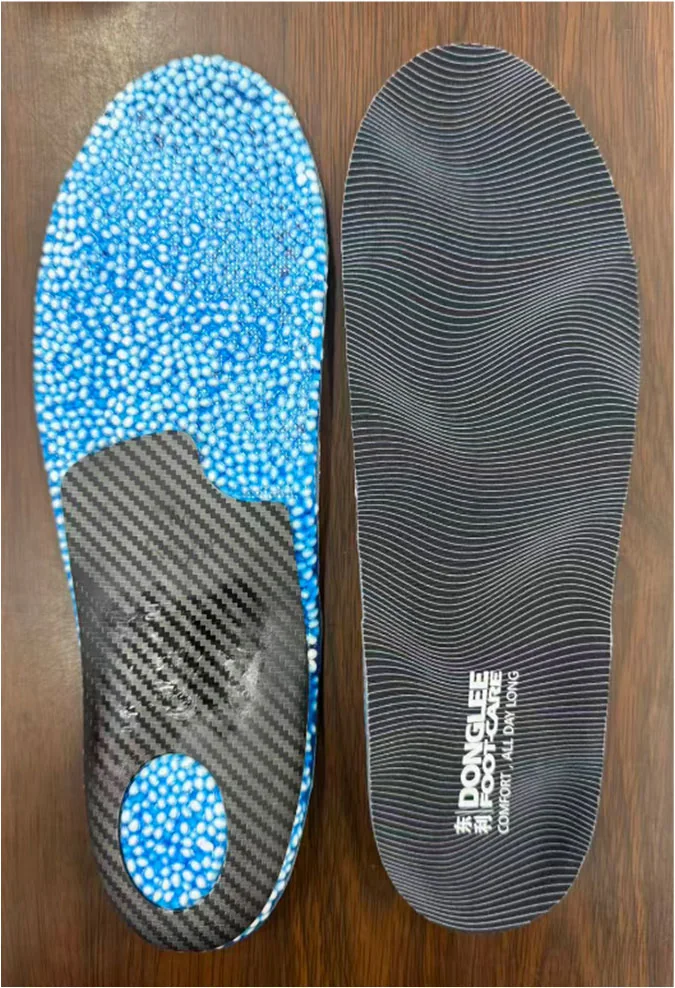
Platform choices
Full-length or zonal carbon-fiber components can create a low-profile, directional stiffness for performance footwear.
E-TPU bead structures, resilient PU/IP foam and gel zones can be combined to tune underfoot response.
TPU or nylon support elements, deep heel geometry and replaceable arch components can address different fit targets.
Key development decisions
Material stack
Moisture-management fabric, mesh or branded textile selected for hand feel, friction and drying behavior.
PU, IP, EVA, E-TPU, PORON or gel selected by rebound, compression set, density and thickness.
TPU, nylon or carbon-fiber chassis designed around flex direction, arch profile and heel stability.
Sports insole development